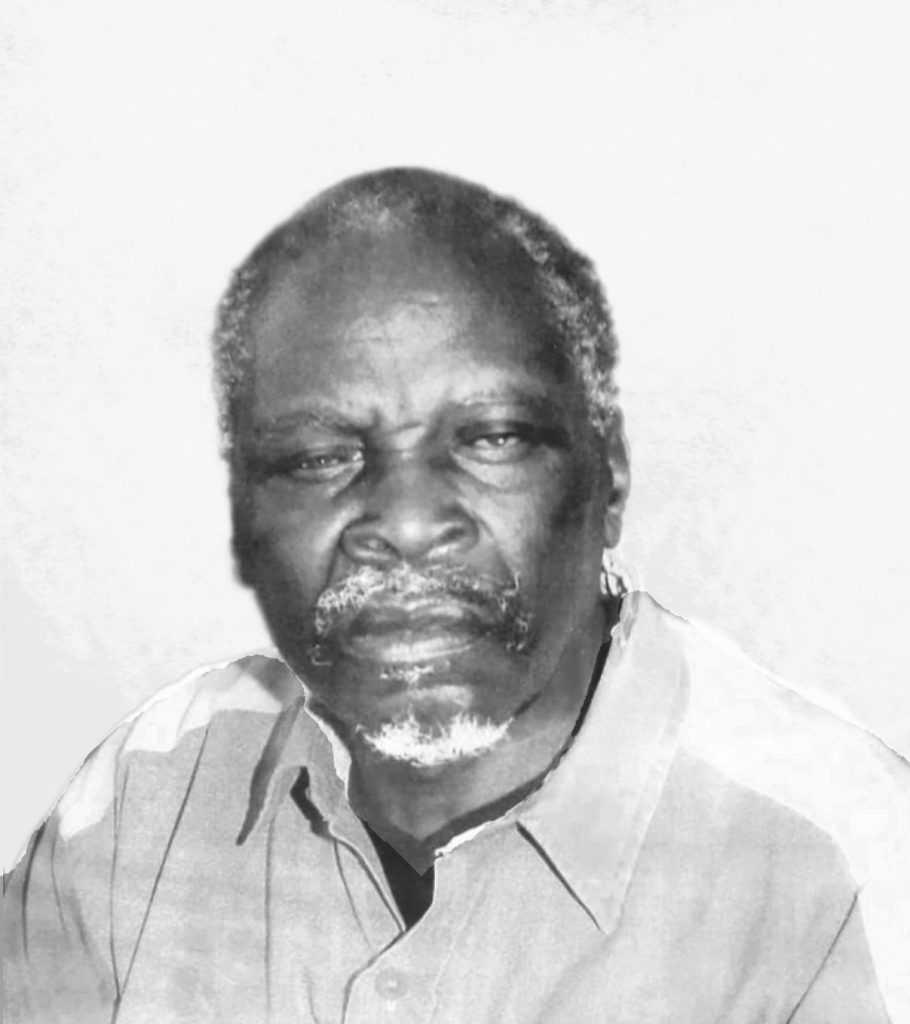
Madimetja Lawrence Phokanoka was born on 10 June 1938 in Raphahla Village, Sekhukhuneland, in the Middelburg District. His father, Jacob Marwale Phokanoka, was a teacher, and his mother was a housewife who earned additional income as a dressmaker. His early years were spent moving between villages before settling in Swekwati Kamamole. In 1945, at age seven, Phokanoka was sent to live with his aunt in Alexandra Township, Johannesburg, where he began his education at a Lutheran Church school. In 1947, he rejoined his parents in Vleisboom and continued his schooling at Mankopane Tribal School. By 1954, he had enrolled at Kilnerton High School, completing his matric in November 1958.
Phokanoka’s political consciousness was shaped by various experiences, starting with his intrigue at a young age over a picture of M.B. Yegwa, an ANC Executive Committee member, on a calendar advertising the 1952 Defiance Campaign. While at Kilnerton, he was inspired by the bravery of students during a protest, which further ignited his passion to fight against injustice. He also became politically aware through reading progressive newspapers like *New Age* and *Contact*, which exposed him to significant political developments such as the 1956 Women’s March and the Treason Trial.
In 1959, after completing high school, Phokanoka enrolled at the University of Fort Hare to study Physics, Chemistry, and Mathematics. It was here that he became deeply involved in political activism, joining the South African Communist Party (SACP) in 1959 and the ANC in 1960. At Fort Hare, he worked closely with other student leaders, discussing key student issues and was elected to represent Fort Hare at the launch of the African Students Association (ASA), an ANC-affiliated body. Though selected to study in the Soviet Union, Phokanoka remained in South Africa, attending the formal launch of ASA in Durban. In 1961, he left Fort Hare and took a teaching position at Hoymeyer High School in Atteridgeville.
By 1963, Phokanoka had returned to Fort Hare, taking up a leadership role in the command structure and overseeing political education. As the apartheid security police began searching for him, he was advised to flee the country. In May 1963, he left for Johannesburg, continuing his underground work with ASA before escaping through Botswana and traveling to Dar es Salaam, Tanzania. In August 1963, he arrived in Moscow for military training, returning to Tanzania a year later. He then spent time in Kongwa and later Morogoro, where preparations for military expeditions into South Africa were made.
Phokanoka was a key participant in the Wankie-Sipolilo Campaign, a joint operation by uMkhonto we Sizwe (MK) and the Zimbabwe People’s Revolutionary Army (ZIPRA). Serving as second commissar under Thembisile Chris Hani in the Luthuli Detachment, he played a crucial role in the operation, which led to his eventual capture by the Rhodesian and South African military forces. Phokanoka was subsequently transported to South Africa, where he spent over a year in Pretoria Central Prison awaiting trial. In March 1969, he was sentenced to 18 years in prison and was transferred to Robben Island, where he served his sentence.
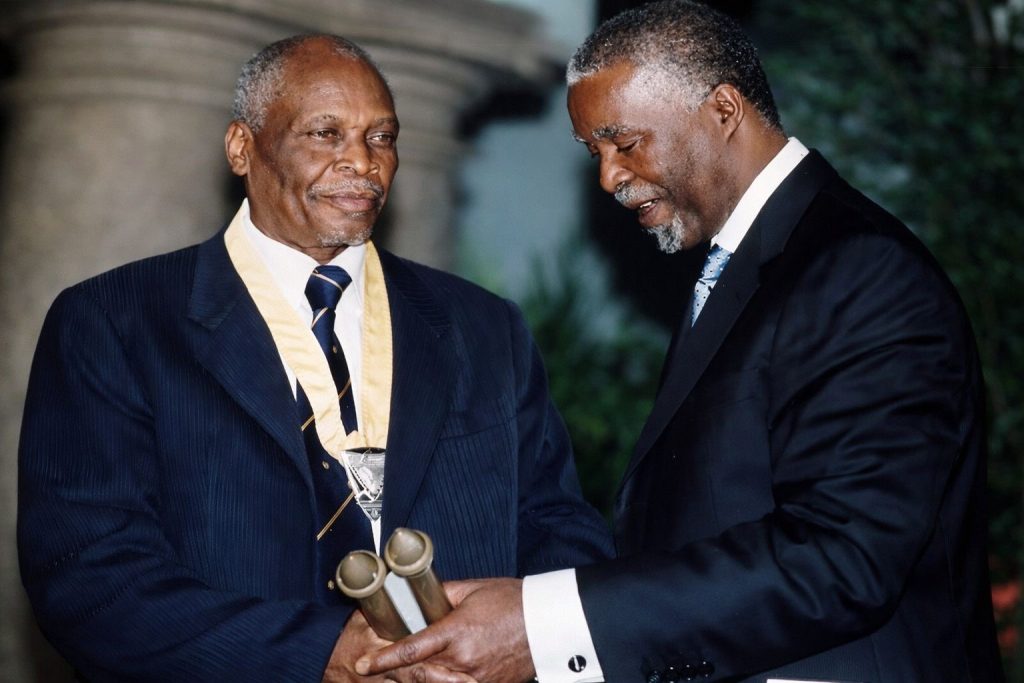
Following his release from prison, Phokanoka contributed to the peace and reconciliation process in the Northern Transvaal. He turned down an offer to work in parliament after the first democratic elections, instead choosing to serve as a junior official in the Northern Province’s Department of Safety and Security. He remained politically active, serving as Chairperson of the SACP in the province and later being honoured as the SACP’s Honorary Life Chairperson. In 2002, he was awarded the Moses Kotane Award by the SACP for his lifelong contributions to the struggle for National Liberation and Socialism. In 2005, he was further recognised with the Order of Luthuli in Silver for his sacrifices in the liberation struggle.
In his later years, Phokanoka became blind and retired to his rural roots in Sekhukhuneland, where he passed away in July 2005. His life remains a testament to his unwavering commitment to the fight for freedom and justice.